

10 Landscape Walkways Ideas to Boost Curb Appeal
A well-designed front walkway does more than guide people to your front door. It shapes how visitors experience your yard. Whether you want a simple garden path or a striking front entryway, thoughtfully executed landscape walkway ideas can help your home feel more welcoming.
9 Front Yard Landscaping Considerations
1. Budget
Your budget influences everything, from materials to the size and complexity of the walkway.
2. Materials
Walkways can be built with many materials, including crushed stone, brick, mulch, poured concrete, gravel, or rubber pavers. Gravel and mulch paths tend to be more affordable upfront with higher upkeep. Paver or natural stone pathways, meanwhile, usually cost more upfront but last longer and are lower maintenance.
3. Upkeep
Some materials require more maintenance than others. Gravel paths may need occasional refilling, while sealed pavers or stamped concrete typically require less frequent upkeep. When selecting materials, be realistic about how much time and effort you can devote to upkeep.
4. Permitting
Local municipalities or homeowner associations may require permits for certain landscape or hardscape projects. If you DIY the project yourself, you will be responsible for maintaining compliance with all local laws and regulations. Hiring professional landscape designers, however, means the experts handle the permitting process for you.
5. Expertise
Some projects are easy enough as DIY projects, like simple gravel or stepping stone paths. Others benefit from the expertise of professionals, like larger walkways with drainage layers.
6. Sustainability
Sustainable landscape design focuses on reducing water use while supporting healthy soil and plant life. Permeable walkway materials and drought-tolerant plantings, for example, can help reduce runoff and conserve water.
7. Style
Walkways should complement the overall landscape style of your property. Popular styles include modern minimalist designs and water-saving xeriscape landscapes.
8. Size of Yard
The size of your yard naturally affects both walkway length and layout. Larger yards often have the space for complex, winding paths, while smaller spaces typically look best with simple, direct walkways.
9. Functionality
Some walkways are purely decorative, while others serve multiple functions. Before you ever break ground, make sure you know exactly what you want out of your walkway.
Eye-catching Walkway Design Ideas & Tips
1. Try as Part of a Larger Xeriscaping Project
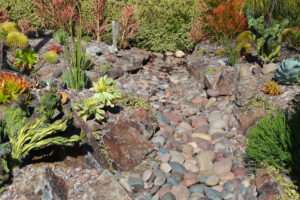
Eco-friendly garden designs and styles, like xeriscaping, often lend themselves to simplicity. A simple pathway, like a gravel path, can work well in temperate, tropical, and desert environments alike. Besides being affordable and easy to install, gravel paths also pair well with drought-tolerant plants, making them a smart addition to a water-saving xeriscape landscape.
2. Don't Forget a Drainage Layer
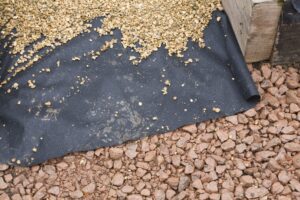
A proper base layer, such as compacted gravel or sand, beneath your walkway helps prevent shifting and improves drainage.
3. Combine Stepping Stones & Mulch
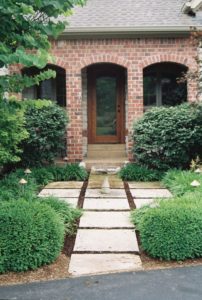
Stepping stones surrounded by mulch create a natural garden pathway. This combination works well for casual landscapes and is one of the easiest walkway styles to install.
4. Try Herringbone Patterns with Bricks
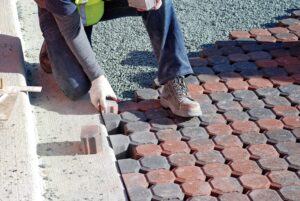
Brick walkways arranged in a herringbone pattern create visual interest while improving durability. The interlocking design also helps prevent movement, keeping the path stable under heavy foot traffic.
5. Add Greenery
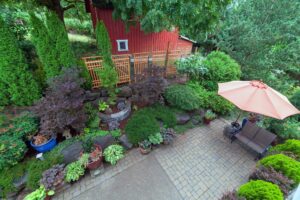
Planting flowers, ornamental grasses, or low shrubs along the edges of a walkway softens hardscape elements; these plantings help blend the path naturally into the surrounding landscape.
6. Light Up the Pathways

Outdoor lighting along walkways improves safety and highlights landscape features at night. Solar ground lights or small lantern fixtures, for instance, can guide visitors while creating a welcoming atmosphere.
7. Stamp Poured Concrete Walkways
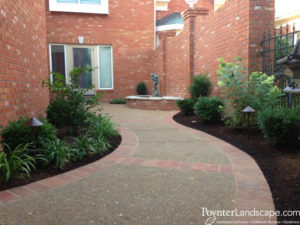
Stamped concrete walkways add texture and visual interest to otherwise simple surfaces. Stamping patterns can mimic stone, brick, or tile while maintaining durability.
8. Use Different Natural Stones

Natural stone walkways using materials like flagstone, granite, or bluestone create a timeless appearance. These materials provide both durability and natural character in many landscape styles.
9. Fill in Gaps with Ground Cover
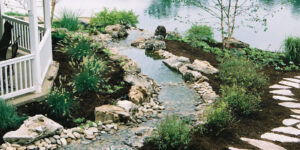
Ground covers, such as moss or creeping thyme, can grow between stepping stones to soften the look of a walkway. These plants also help reduce erosion and provide seasonal color.
10. Go Ultra-low Maintenance with Rubber Pavers
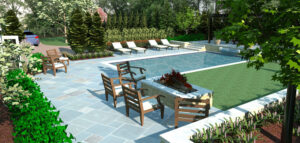
Rubber pavers offer a durable and low-maintenance option for walkways. These recycled materials resist cracking and provide good traction, which can be helpful in areas with heavy foot traffic.
Landscape Walkway FAQs
What is a budget-friendly way to do a walkway?
Gravel, mulch, and simple stepping stone paths are some of the most affordable walkway options. These materials are widely available and relatively easy to install.
What are the different types of walkways in landscape design?
Common walkway types include gravel paths, brick paver walkways, natural stone paths, poured concrete walkways, and stepping stone garden paths.
How can I make a walkway look nice?
Improving the appearance of a walkway can be as simple as adding landscape lighting and decorative edging. These elements add visual interest and help the walkway feel integrated into the landscape.
How deep does my paver walkway base need to be?
Most paver walkways require a base that is about 4 to 6 inches deep; it typically consists of compacted gravel topped with a layer of sand.
What are some creative landscape walkway ideas for small gardens?
Curved stepping stone paths or narrow gravel walkways surrounded by ground cover plants work well in smaller garden spaces.
Why should I work with an expert for my walkway design?
Experienced landscape professionals can evaluate drainage, soil conditions, and layout to create durable walkways that complement the surrounding landscape.
Creating Visual Interest with Walkways
Walkways can transform how people move through and experience a landscape. A carefully designed path can guide visitors, connect outdoor living areas, and highlight the best features of your yard.
Best Way to Clean Pavers, According to Landscape Experts
Pet-friendly Landscaping Design Ideas & Tips

St. Louis premier landscape artisans
15815 Jedberg Ln. Ballwin, MO, 63021
Connect

Sign up for ViewPoynt! Get free design ideas, outdoor decorating tips, gardening advice, and special offers.